
Search Carter County Court Records
Carter County court records are available through the county courthouse in Elizabethton and through Tennessee's shared TnCIS system. That gives searchers a practical mix of online and in-person access. The Circuit Court Clerk keeps the local record trail, and the county uses TnCIS for participating court records. If you know the filing type or party name, Carter County can be a fairly direct search. If you do not, the clerk office and the state system still give you a clear path forward.
Carter County Court Records Overview
Carter County provides court records through the Tennessee Court Information System, which gives the county a shared digital search point for participating cases. The Circuit Court Clerk maintains records at the Carter County Courthouse in Elizabethton. That office is the first stop when you need to confirm a filing, check a docket, or get a copy of a case file. Because Carter County uses the state system, many users can begin the search online before they ever visit the courthouse.
Even so, the local courthouse remains the place where the file lives. Online results can point you toward a case, but they do not always give you the full document packet. The clerk office can help with inspection, copies, and questions about whether a file is active or archived. For a county search, that local office is still the most reliable point of contact. If you are working from a name only, the office can often help you narrow the court and the year before you request copies.
Use TnCIS for the online entry point and the Tennessee courts site for statewide structure. If the case moved to appeal, Public Case History is the official appellate lookup. The manifest image for Carter County points to the Tennessee Court Information System.
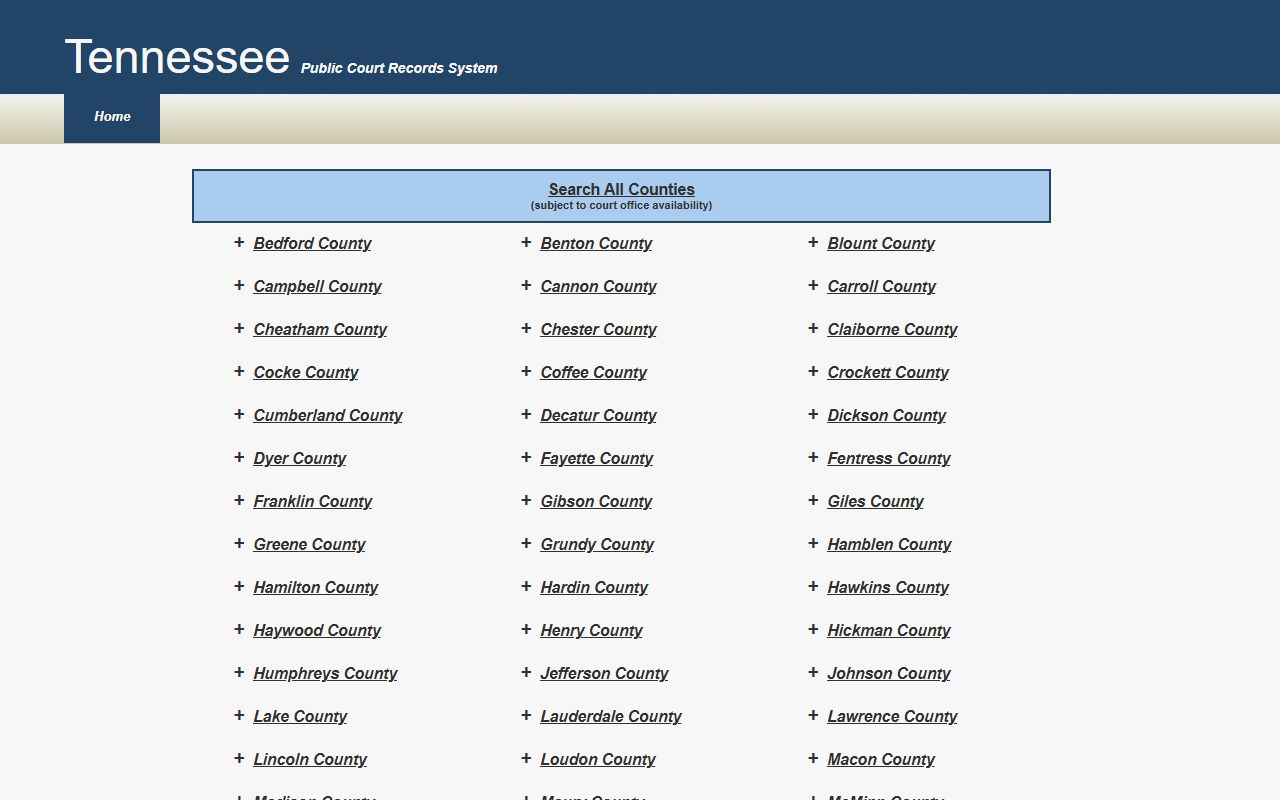
That image points to the online portal that many Carter County searches will use first.
Carter County Court Records Search
The best Carter County request starts with the basics. Use the party name, the approximate filing year, and the case type if you know them. That keeps the request focused and helps the clerk know whether the record is likely a civil matter, a criminal matter, or a sessions case. Carter County court records are much easier to locate when the office does not have to guess which file you mean.
Elizabethton is the county seat and the local place where many records requests begin. If the online portal gives you a lead, bring that lead with you to the courthouse. If it does not, the clerk office can still tell you where the case likely belongs. A short, direct request is the best way to get a useful answer quickly. Older files may take longer, but the search still starts the same way: with the right office and the right court type.
The Tennessee Public Records Act, found in T.C.A. section 10-7-503, creates the default rule of access. The Tennessee Comptroller's Open Records Counsel and CTAS public records guide explain how inspection and copies work. Those sources are useful when you need to know whether Carter County can let you inspect a file or whether you should ask for copies up front.
Keep these details ready when you ask for Carter County records:
- Full name of the party or defendant
- Approximate year of filing
- Case type, if known
- Whether you need inspection or copies
Carter County Circuit Records
Carter County Circuit Court records are the main file set for many county cases. The Circuit Court Clerk keeps those records at the courthouse in Elizabethton. If the matter is a civil lawsuit, a criminal case, or another file that belongs in Circuit Court, the clerk office is the right place to ask. The online system can help you confirm the case exists, but the courthouse is still where the paper trail sits.
Because Carter County uses TnCIS, a lot of searches can begin online and then move to the clerk for copies or a fuller review. That is useful when you know a rough year or a party name but not much else. If the case is older, the office can tell you whether it is in the active files or in a slower archive path. That kind of guidance is often the difference between a fast search and a long one.
When you get stuck, the Tennessee State Library and Archives is a strong backup. TSLA can help you work through older minutes and records that may not be in the live search system. For appeal-level matters, Public Case History remains the state tool to use after the trial court file. Carter County searches are simplest when you move in that order: county, state system, archive, then appeal database if needed.
For older records help, use TSLA and Public Case History.
Carter County Records Help
Carter County is another place where a narrow request gets you farther than a broad one. If you have the party name and the filing year, the clerk can usually tell you whether the file is a live record, an archived record, or one that needs a deeper courthouse search. If the online trace stops short, that does not end the search. It only means the clerk office becomes the main source.
That pattern works well in Elizabethton because the county already gives you both online and in-person paths. Use both, and the Carter County court records trail is usually manageable.
When a case is old, spellings can shift and paper files can move. A second look with the clerk often fixes that. It is a small step, but it can save a lot of time.
Carter County Court Records Requests
A careful Carter County Court Records request usually works better than a broad search. Start with the court lane named on this page, then ask for one case name, one filing window, and one type of record at a time. If the live search only shows a docket line, ask the clerk whether the full file is still active, stored off site, or handled by another office such as Circuit, Sessions, or Clerk and Master. That keeps the request local and practical. Carter County searches also move faster when you say whether you want inspection, a plain copy, or certification before staff begins the pull. If the file is older, ask whether TSLA or the appellate history tool is the better next step.