
Search DeKalb County Court Records
DeKalb County Court Records are built around a simple Tennessee pattern. You can start with the state portal, then move to the circuit clerk if you need the actual file or a certified copy. In Smithville, the Circuit Court Clerk keeps the local record trail moving, and that office is the best place to ask when a case is not enough to identify itself on a search screen. If you know the party name, the filing year, or the court type, DeKalb County is manageable. If you do not, the county and the state tools still give you a clean first step.
DeKalb County Quick Facts
DeKalb County Court Records Search
DeKalb County Court Records can usually begin with TnCIS. The county provides court records through the statewide system, which means you can often confirm a case before you make a courthouse trip. That first check matters because it lets you see whether the file exists in the live county system or whether the clerk office will need to do the rest of the work. A short request with the party name and the year is often enough to get a useful answer.
The Circuit Court Clerk maintains records at the DeKalb County Courthouse in Smithville. That office is the county's local records hub, so it is the place to ask when you want the full document file. DeKalb County court records are not all kept in the same way, but the clerk office can usually tell you whether the case belongs in the working stack, in a docket book, or in an archived file. That guidance saves time and keeps the request focused on the right court lane.
Use TnCIS for the online starting point and tncourts.gov for the statewide court map and forms. If the case moved beyond the county, the Tennessee appellate database at Public Case History is the official follow-up source. Those tools work best when you already know the likely court.
Use these details when you ask for DeKalb County Court Records:
- Party name or defendant name
- Approximate filing year
- Case type, if known
- Case number, if available
- Whether you need inspection, a copy, or a certified copy
Under Tennessee law, public records are open for inspection during business hours unless another law limits access. The rule is in T.C.A. 10-7-503. That baseline applies to DeKalb County Court Records too, even when the clerk still needs more detail to find the file.
The Tennessee Comptroller's Open Records Counsel and the CTAS public records statutes guide are the best official references when you need help understanding inspection, copies, or a redaction question.
The manifest image tied to TnCIS shows the county's main online search system.
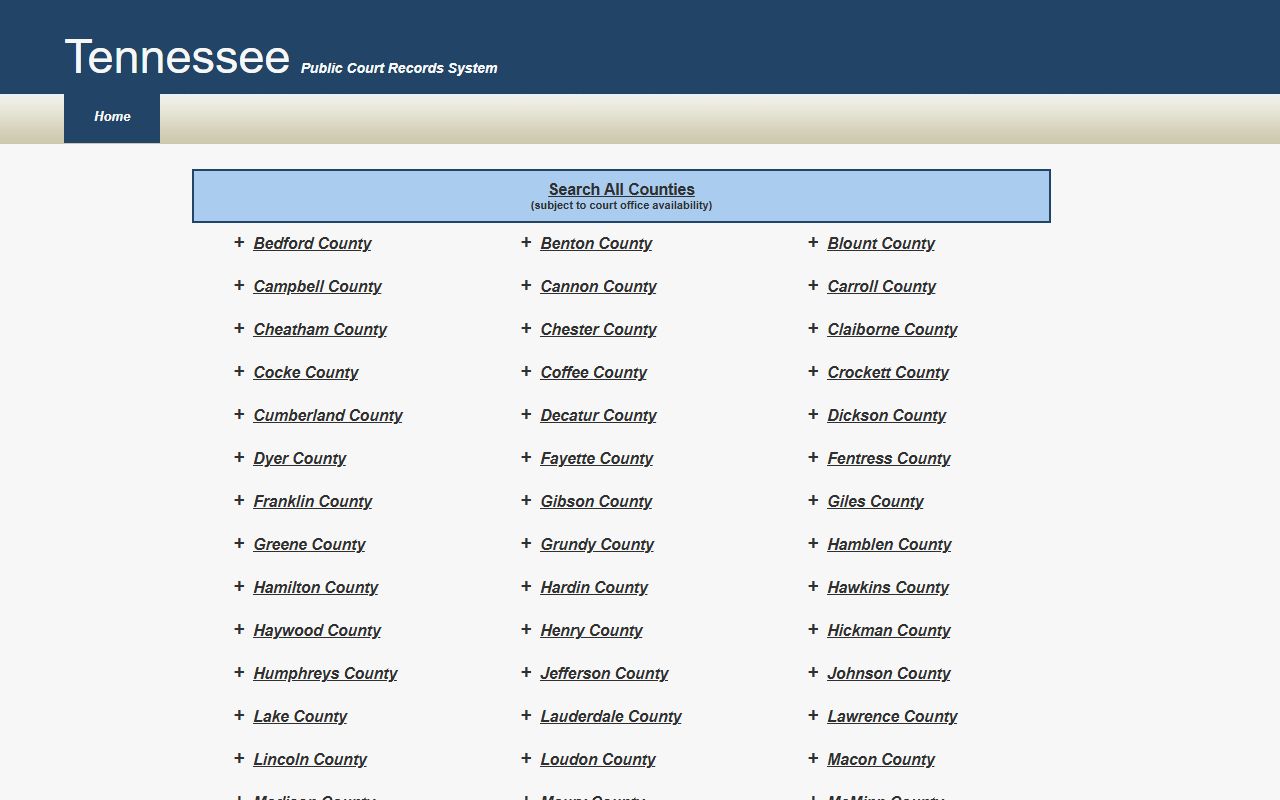
That image points to the official county search system, which is the best first step for DeKalb County Court Records.
DeKalb County Record Access
DeKalb County Court Records are easiest to request when you know which office keeps the file. The Circuit Court Clerk in Smithville is the local custodian for the trial court record set, and that makes the courthouse the right stop when you need the actual document or a better case trail. A civil case, a criminal matter, or a family record may all point to the same courthouse, but the exact lane still matters when the clerk starts pulling the file.
A narrow request works best. Give the office a name, a date range, and the court type if you know it. If you only need a status check, say that. If you need a certified copy, say that first. Clear questions make the request smoother and help the clerk decide whether the record is live, archived, or still in a docket stack. DeKalb County is a good example of why the office and the case type should be matched before you ask for a copy.
For state support, the Tennessee courts site and the Public Case History database can help when a DeKalb County case moves into appeal or when you need to understand the court structure around the record. They do not replace the courthouse, but they do make the search cleaner. If the county file is older or partly digitized, the state tools can keep the request moving in the right direction.
Note: If the clerk tells you the file is archived, ask for the date range or storage route before you leave the counter.
The manifest image tied to TnCIS points to the county's online search system.
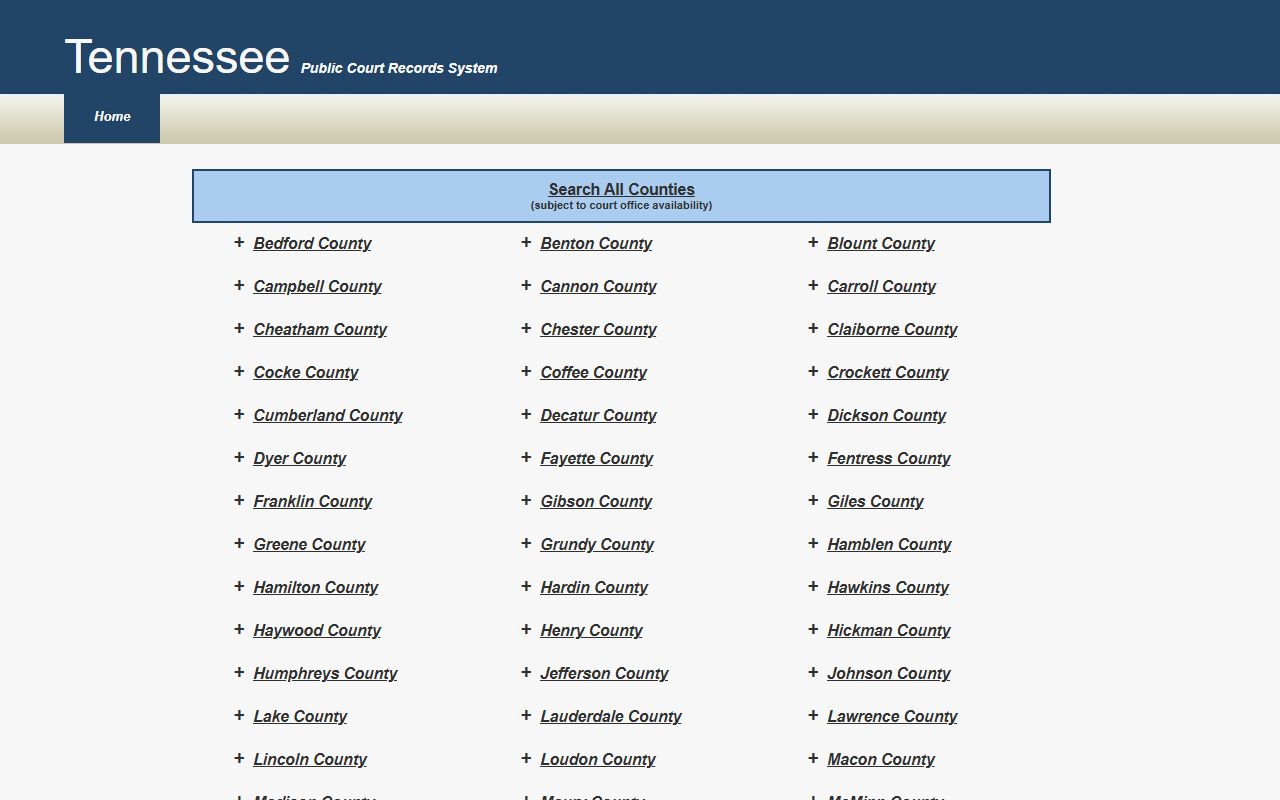
That state image is a safe backup path when you want another official view of Tennessee court records access.
DeKalb County Record Types
DeKalb County Court Records cover the kinds of files most people need to track. Circuit Court can hold civil litigation and criminal matters, while General Sessions handles the smaller civil work and misdemeanor traffic lanes that are common across Tennessee. That split is important because it tells you why the clerk may need the court type before the file can be found. A civil dispute and a criminal matter do not use the same lane, so the case type matters from the start.
Once you know the lane, the search becomes more direct. A civil case or criminal matter points toward the circuit office. A traffic or lower-value civil case may be easier to confirm through the general sessions stack. In DeKalb County, that distinction saves time because the same county can hold many different record kinds, but each one lives in a specific part of the courthouse record trail. The clerk can usually tell you where the paper trail starts.
Historical and appellate follow-up still matters. If a case went up on appeal, the state appellate database can show the later record path. If the case is old enough that the courthouse search needs help, the Tennessee State Library and Archives can point you toward older court minutes and archived records. DeKalb County Court Records are often easier once you think in layers instead of expecting one search box to do everything.
TSLA's court records FAQ is the best official fallback when a DeKalb County record is older or not easy to pull from the live system.
For the first look, the TnCIS portal and the county courthouse work best together.
DeKalb County Historical Records
Older DeKalb County Court Records may live in paper files, ledgers, or archived material instead of the live online system. That is normal across Tennessee. The State Library and Archives explains how to search older court records by court and time period, which is helpful when a file predates digital access or when only a narrow time frame is known. A short name and year range can be enough to begin.
The courthouse in Smithville remains the best local starting point, but TSLA becomes more important when the file is boxed, microfilmed, or otherwise outside the working stack. The Tennessee courts site still helps because it shows the state court structure behind the county office. That kind of context matters when you are trying to figure out whether a civil case or a criminal file should be in one lane or another.
DeKalb County Court Records are often useful for family history, property questions, and old civil disputes. A quick online check may answer the first question, while a courthouse pull or archive search may answer the rest. Keep the request narrow and the records trail gets much cleaner.
The state public records guidance at the Open Records Counsel and CTAS is worth using when the record is open but the route to it is not obvious.
Historical DeKalb County research also benefits from the state archive guide at TSLA's court records FAQ, which helps when the file is older or stored off site.