
Search Johnson County Court Records
Johnson County Court Records are easiest to start when you keep the request narrow. The county provides court records through TnCIS, so the first step is usually a quick online search before you ask the clerk for the full file. That helps when you only have a party name, a year, or a rough idea of the case type. The county system can point you in the right direction fast. From there, the clerk office and the state tools can finish the search if the record needs a deeper pull or older context.
Johnson County Court Records Quick Facts
Johnson County Court Records Search
Johnson County Court Records begin with the statewide court information system. Research says the county provides court records through TnCIS, which means the online check is the natural first move. That first look may show a docket, a case style, or enough detail to tell you which office should handle the request. It is a useful starting point when you only need to confirm that a case is there. It is also useful when the case is old enough that you need a better sense of the court lane before asking for the file.
The county's TnCIS access path trims down the search before you ever make contact with the office. A file may still need a clerk pull, but the portal can often show whether the record is live, what court handled it, and whether a follow-up request is likely to help. Johnson County Court Records are best approached in that order. Start with the county system, then move to the office, and only then move to state tools if the record has a longer history.
That order matters because a quick portal hit can save a long back-and-forth later. It also keeps the request grounded in the official county trail. Once you know which court lane the case belongs in, the clerk can move much faster and you can ask for the right kind of copy without guessing.
This image keeps the search anchored to TnCIS, the safest online starting point for Johnson County Court Records.
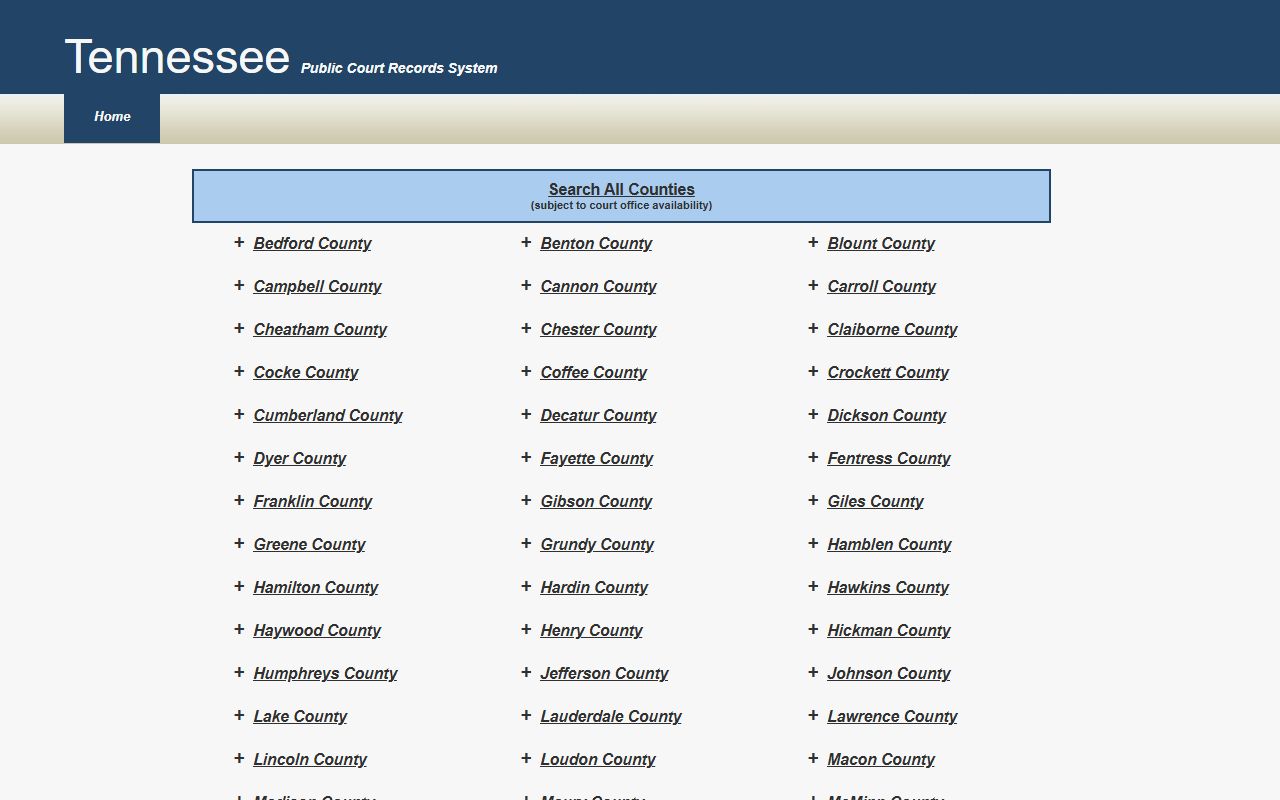
That image points to the county's official online access system and keeps the search inside Tennessee's own court network.
Johnson County Court Records Access
Access works best when the request is specific. Johnson County Court Records can involve civil files, criminal files, general sessions work, and older paper records that are not obvious from a quick search. A good request should tell the office what you think the case is, when it was filed, and what kind of result you need. A full copy, a certified copy, and a simple inspection request all put different work on the clerk. The clearer your request, the better the response.
The Tennessee courts site at tncourts.gov helps explain the statewide court structure behind the county file. The Public Case History database helps when a case leaves the trial court and moves into appeal. That split matters because Johnson County Court Records may live in more than one place over time. The county office holds the local file. The state tools help you follow what happened after that. TSLA is the next stop when the older record trail matters more than the live portal.
Use these details when you ask about Johnson County Court Records:
- Party name or business name
- Approximate filing year
- Case type, if known
- Case number or docket number, if available
- Whether you need inspection, a copy, or a certified copy
Tennessee's public records rule is the baseline for the county request. The law is in T.C.A. 10-7-503. The Tennessee Comptroller's Open Records Counsel and the CTAS public records guide explain how that rule works in practice. They are useful when the county record is public but the route to it is not obvious.
Johnson County Historical Court Records
Older Johnson County Court Records may move out of the live system and into storage or archive work. That is common. It means the search shifts from the portal to the clerk office and sometimes to the Tennessee State Library and Archives. TSLA explains how to work through older files by court and time period, which is exactly the kind of help you need when the record predates the web or the portal only shows part of the case trail. A year range can be enough to begin.
Historical research works best when the request is simple. Give the clerk the best name you have, the likely year, and the type of case. That keeps the search tight and helps the office decide whether the file is live, archived, or better handled through another county record set. Johnson County Court Records can be easier than they look once you keep the request narrow and focus on the official trail rather than the broad web.
Older files can also show why the court type matters. A record may sit in one lane, while the later appellate history lives somewhere else. That is normal in Tennessee. If you keep the name and year in front of you, the county and state tools can work together instead of competing with each other.
For older files, start with TSLA's court records FAQ, then use Public Case History if the case moved into appeal.
Note: If the clerk points you to archived material, ask for the date range or storage route before you leave the counter.
Johnson County Court Records Sources
These official sources keep a Johnson County Court Records search tied to Tennessee's own records system and the county's live access path.
Once you know the case lane, the county office and the statewide tools can carry the Johnson County Court Records search farther than the portal alone.
Johnson County Court Records Requests
A careful Johnson County Court Records request usually works better than a broad search. Start with the court lane named on this page, then ask for one case name, one filing window, and one type of record at a time. If the live search only shows a docket line, ask the clerk whether the full file is still active, stored off site, or handled by another office such as Circuit, Sessions, or Clerk and Master. That keeps the request local and practical. Johnson County searches also move faster when you say whether you want inspection, a plain copy, or certification before staff begins the pull. If the file is older, ask whether TSLA or the appellate history tool is the better next step.